Your suppliers are good at their jobs, but none of them can read your mind. A clear brief, sent at the right time, is the single easiest way to make your wedding day run without you having to answer a single question on it.
What a good supplier brief looks like
You do not need a forty-page document. You need three things, and ideally they all fit on two sides of paper:
- A one-page run sheet (the timeline)
- A contact sheet
- Venue notes and rules
Send the same pack to every supplier. Even if the florist does not need to know when the first dance is, it helps everyone to see the whole picture, and you only have to keep one version up to date.
1. The one-page run sheet
List every key moment with a time, a location and who is involved. A simple version might include:
- Supplier access and setup times
- Ceremony start and finish
- Drinks reception and group photos
- Wedding breakfast, speeches and room turnaround
- Evening guests arrive
- Cake cutting and first dance
- Photo booth opening and closing times
- Evening food
- Last orders, last song and carriages
Add a short note against anything unusual: a surprise performance, a speech moved to before the meal, a guest who needs step-free access. If you are not sure how your evening should flow, our guide to the wedding evening reception timeline has a sample to start from.
2. The contact sheet
One line per supplier: company, name of the person attending on the day, and a mobile number. Then add the two most important names:
- The venue coordinator on the day (not always the person you planned with)
- Your day-of contact: a trusted friend, relative or planner who can answer questions so you do not have to
Make it clear in the pack that suppliers should go to your day-of contact, not to you. Then actually brief that person. They should know the timeline, where everything is going and who to call if something runs late.
3. Venue notes and rules
Every venue has its own way of doing things, and suppliers need to know them before they arrive. Include:
- Parking and the best entrance for unloading
- Any time restrictions on access or setup
- Noise limits and the finish time
- Rules on candles, confetti or anything else they restrict
- Whether the venue has asked for documents from suppliers, such as public liability insurance or PAT testing
If you have not covered these with your venue yet, our list of questions to ask your venue about evening entertainment is a good checklist.
What each supplier particularly needs
Photographer
A shot list of must-have group photos with names, plus who will help gather people.
DJ
Your first dance, any special songs and your must-play and do-not-play lists, plus where they are setting up. If you have booked with our sister company EventsDJ, they will go through all of this with you.
Caterer
Final numbers, dietary needs by name and table, and the evening food time.
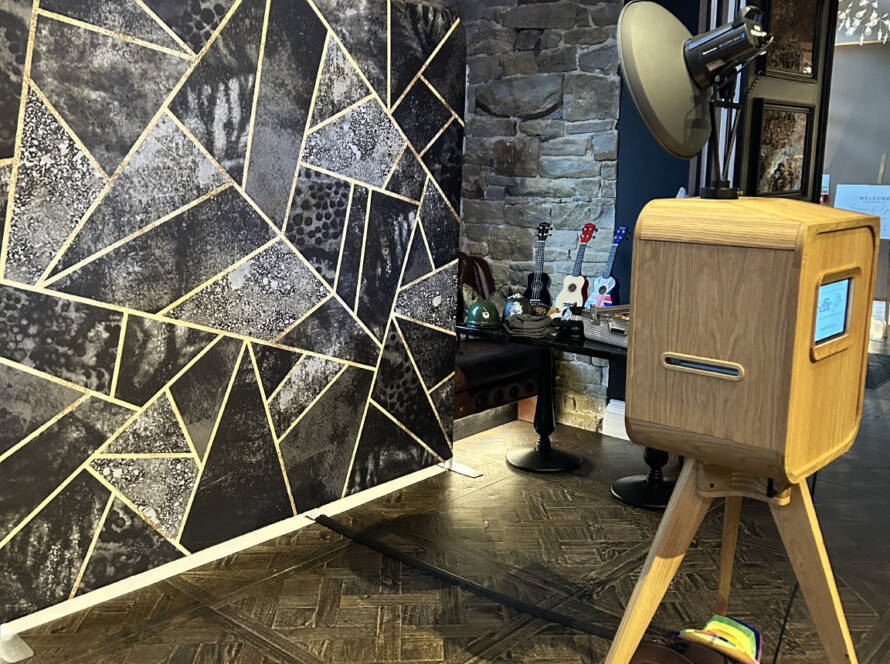
Photo booth
For us, the most useful things to know are:
- The booth opening time. On staffed booths like the Glam Booth, our team arrives an hour before the booth opens, so we will plan around that.
- Where the booth is going, ideally with a power socket nearby and some space for a queue.
- Who has the guest book and pens, if you have booked Guest Book Management.
- Your print design sign-off, so your names, date and colours are exactly right.
When to send it
Send a first draft of the timeline to suppliers a month or so before, then a final version about two weeks out. That lines up nicely with when final balances are usually due; ours is due 14 days before the event. Ask each supplier to reply confirming they have it, and to flag anything that does not work.
Then send the final pack to your venue coordinator too. They are the person on site all day, and they will often spot clashes nobody else has noticed.
On the day: let it go
Timings will slip a little. Speeches overrun, the meal is ten minutes late. That is normal, and a well-briefed team will adjust between themselves. Your job is to enjoy it.
Common briefing mistakes to avoid
Even organised couples can trip up when it comes to briefing suppliers. These are the mistakes we see most often:
- Sending different versions to different people. If you change a time, update everyone at once. One shared document, or one shared planning portal, avoids confusion.
- Leaving out the venue contact. Your suppliers need to know who to call at the venue on the day, not just the general phone number.
- Forgetting setup and access times. Tell every supplier when they can arrive, where to unload and where to park. Your venue will usually have rules on this.
- Not mentioning the details that matter to you. If there’s a song you never want to hear or a relative who shouldn’t be in certain photos, put it in writing.
- Briefing too late. A brief sent the night before doesn’t give anyone time to ask questions. Aim for two to three weeks before the wedding.
Let the portal do the hard work
When you book a photo booth or DJ with us, your wedding planning portal holds most of the brief for you. Your timeline, booth location, backdrop, print design and music choices all sit in one place, and you can invite your planner or venue coordinator to see the parts that matter to them.
It means our team always has the latest version, and you don’t have to remember who you told what. For the wider picture of who to book when, read our wedding supplier booking timeline.
FAQs
Who should be our day-of contact?
Someone calm and organised who is not in the wedding party, so they are free during photos and speeches.
Do suppliers need the whole timeline?
It helps. Seeing everything lets them spot clashes, like a booth opening during the first dance.
What if timings change after we send the brief?
Send one updated version to everyone, with the changes highlighted, rather than lots of separate messages.
If you would like a booth team who will slot straight into your plan, request a quote using the form below.